Advancing Patient-Centered Medical Facilities and Services
What Balance & Vestibular Testing Evaluates
Balance depends on three systems working together:
Vestibular system (inner ear)
Vision
Proprioception (muscles, joints, pressure sensors)
Testing identifies whether dizziness or imbalance comes from the inner ear or neurological causes.
Common Balance and Vestibular Tests
Balance and vestibular testing provides a comprehensive evaluation of how the inner ear and related systems contribute to dizziness and imbalance.
Comprehensive Dizzy Battery Test
Comprehensive baseline and diagnostic assessment focused on dizziness which may include:
Auditory Brainstem Response (ABR) - measures how your hearing nerve and brain pathways respond to sound
Electrocochleography (ECoG) - measures the electrical activity in the inner ear in response to sound
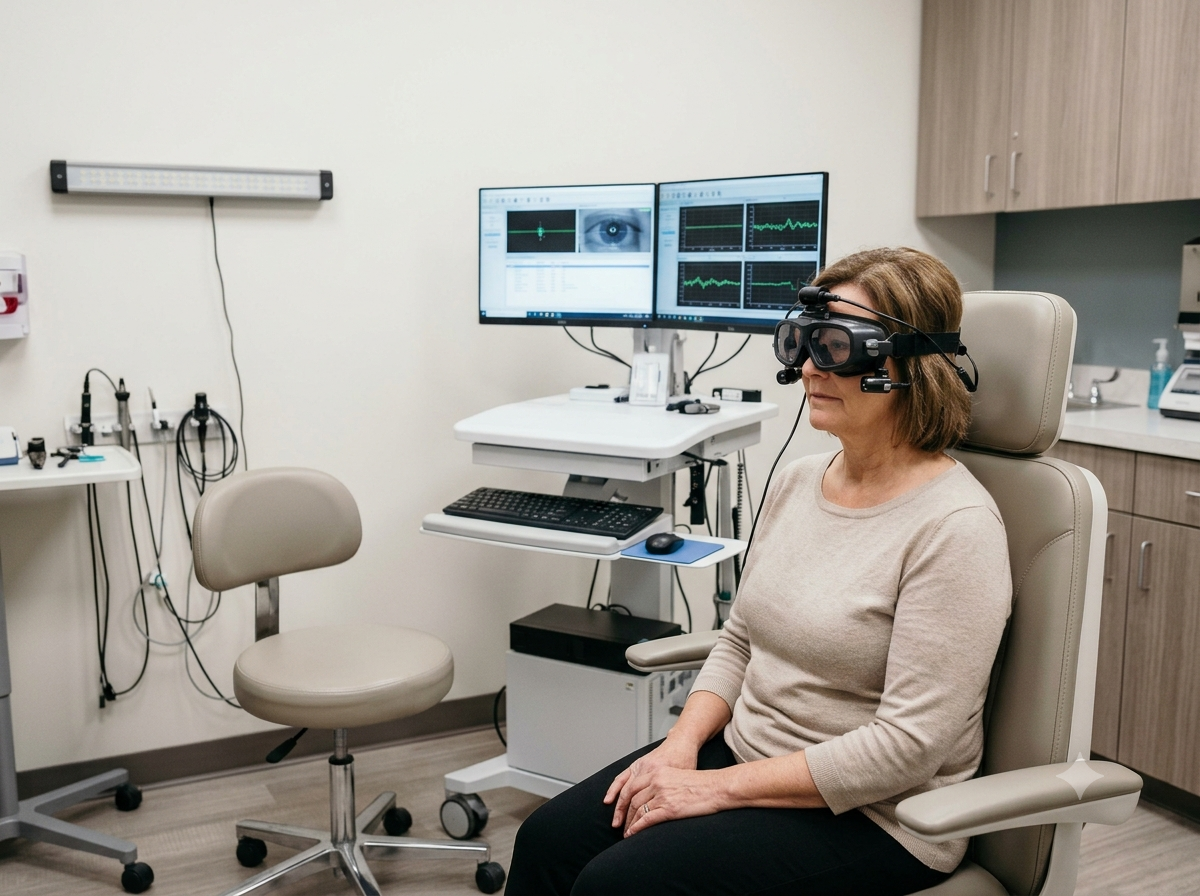
Videonystagmography (VNG)/ Electronystagmography (ENG) - assess your inner ear and balance function by tracking involuntary eye movements
Video head impulse test (vHIT) - measure inner ear balance function by evaluating the vestibulo-ocular reflex
Vestibular Evoked Myogenic Potential (VEMP) - measures how well the balance organs in your inner ear respond to sound or vibration
Additional advanced vestibular tests as required
Screening Vestibular Testing
Focused Vestibular assessment which may include VNG, vHIT, and advanced vestibular tests as required
Vestibular Rehabilitation
Comprehensive vestibular testing is required to assess vestibular function and guide the vestibular rehabilitation program
Tinnitus Test Battery
Comprehensive tinnitus testing is required which may include ABR, hearing tests, ECoG, and VEMP, and advanced tinnitus tests.
What to Avoid
Medications: Stop taking anti-dizziness medications, sedatives, tranquilizers, and antihistamines 24 to 48 hours before your test, but always check with your doctor first before stopping any prescribed drugs.
Alcohol and Caffeine: Avoid alcoholic beverages for 24 to 48 hours before the test, and limit or avoid caffeine for 24 hours.
Food: Do not eat a heavy meal; most clinics recommend eating only a light meal or fasting for 2 to 3 hours before your appointment to prevent nausea.
Face and Eye Makeup: Do not wear mascara, eyeliner, dark eye shadow, or facial lotions. Special infrared goggles are used to record eye movements, and makeup can interfere with the tracking.
What to Wear and Bring
Clothing: Wear comfortable, loose-fitting clothes (like pants instead of a dress or skirt) because you may need to move around or lie on a table. Wear flat, closed-toe shoes with good traction.
Vision Aids: If you wear contact lenses, remove them before the test and bring your eyeglasses instead. Bring your hearing aids if you use them.
Plan to have a family member or friend drive you home, as the tests can leave you feeling temporarily dizzy or unsteady.